China-built vs "regular" Tesla Model 3: what's actually different for Canadian buyers
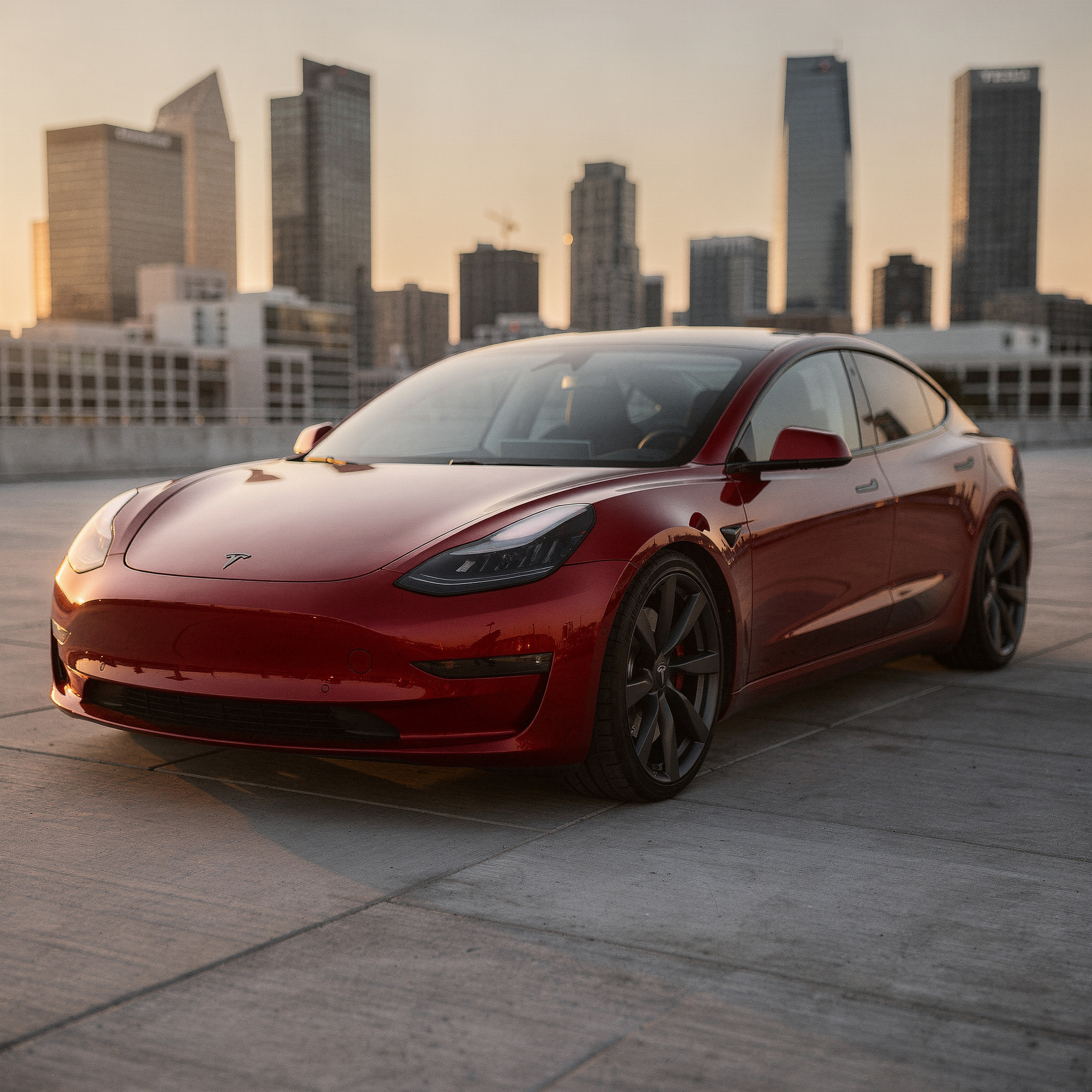
If you're shopping a Model 3 in Canada in 2026, the "made in China vs regular" question is no longer academic. The car Tesla sells here today comes from its Shanghai plant, not the California factory most people think of as the default. The two builds share a body and software, but they differ on battery, some specs, price, and, crucially, whether you get a federal rebate. Here's what matters before you order.
The short version
- 01"Regular" Model 3 usually means the Fremont, California car; the China car is built at Giga Shanghai. Both are genuine Teslas built to Tesla's global spec.
- 02You can tell them apart by VIN: a Shanghai car starts with LRW, a Fremont car starts with 5YJ.
- 03The biggest real-world differences are battery chemistry/supplier and, historically, small spec gaps (horsepower, range).
- 04As of 2026, the Model 3 sold new in Canada is Shanghai-built after a tariff deal cut the duty on Chinese EVs from 100% to 6.1%.
- 05The catch: Shanghai-built Model 3s do not qualify for the $5,000 federal EVAP rebate because China has no free-trade agreement with Canada.
The short answer
There is no separate "China Model 3" model. It's the same car built on different lines. Tesla builds the Model 3 at its Fremont, California factory and at Gigafactory Shanghai, and the plant that supplies Canada has shifted back and forth depending on tariffs.
When people say the "regular" Model 3, they usually mean the Fremont car that North America has historically received. The "China" Model 3 is the Shanghai-built export car. Mechanically they're close, but the details below are where buyers actually notice a difference.
What actually differs
Battery chemistry and supplier. This is the single biggest hardware difference. Shanghai-built rear-wheel-drive Model 3s have used cobalt-free lithium iron phosphate (LFP) cells, while Fremont's standard cars used nickel-based (NMC) chemistry from Panasonic. LFP is durable and can be charged to 100% daily, but it loses more usable range in cold weather, which matters on the Prairies.
Small spec gaps. On the Performance trim, the Shanghai car used a 79 kWh LG pack versus an 82 kWh Panasonic pack in the Fremont car, and the Chinese-built Performance was rated with slightly less horsepower. Notably, when Tesla did ship some Fremont-built Performance cars to Canada, it fitted them with the LG pack anyway, so a US build didn't guarantee the bigger battery.
Build quality. This is where opinion outruns data. Among owners, Shanghai has a strong reputation for panel fit and finish, and Fremont's early cars drew complaints. But Fremont quality has improved over the years, and most people can't tell which factory built a car without checking the VIN. Treat build-quality claims as anecdote, not spec.
- VIN prefix
- LRW
- RWD battery chemistry
- LFP
- Performance pack
- 79 kWh LG
- VIN prefix
- 5YJ
- RWD battery chemistry
- NMC/Panasonic
- Performance pack
- 82 kWh Panasonic
How to tell which one you have
The VIN is the reliable tell. The first three characters identify the plant: LRW means Giga Shanghai (China), and 5YJ means Fremont (California). If you decode the full VIN, the 11th character also flags the location of manufacture, with F for Fremont and C for China. You'll find the VIN on the lower windshield, the driver's door jamb, and in your Tesla account before delivery.
If you're buying new in Canada right now, expect an LRW car. If you're shopping used, check the VIN rather than assuming.
The 2026 Canadian reality
Canada's sourcing story has whiplashed. Before late 2024, Canada got Shanghai cars. When Canada imposed a 100% surtax on Chinese-made EVs in 2024, Tesla switched Canada to Fremont supply. Then Canada's 25% counter-tariff on US-made vehicles in early 2025 pushed the Model 3 Long Range AWD to $79,990, and Tesla pulled its US-built Canadian inventory.
The turning point was a January 2026 deal between Prime Minister Mark Carney and Beijing that cut the duty on Chinese-made EVs from 100% to 6.1% under a quota of 49,000 vehicles a year (rising to 70,000 by 2030). That reopened the door to Shanghai cars, and Tesla was first through it. The result is the cheapest Model 3 Canada has ever seen.
| Metric | Premium RWD | Premium AWD | Performance |
|---|---|---|---|
| Starting price (CAD) | $39,490 | $49,990 | $74,990 |
| Range | 463 km | 572 km | 478 km |
| 0-100 km/h | 6.2 sec | 4.4 sec | 3.1 sec |
| Drivetrain | Single motor RWD | Dual motor AWD | Dual motor AWD |
| Built in | Shanghai | Shanghai | Likely Fremont |
A note on that RWD acceleration figure: Tesla listed it as 4.2 seconds at launch, then revised it to 5.2, then to 6.2 seconds within weeks, without explaining the change. If sprint time matters to you, confirm the number on Tesla's configurator at the moment you order.
For US comparison, the Premium RWD lists at US$42,490 south of the border, which converts to roughly the same the Canadian window sticker or higher. The Shanghai supply is why the Canadian base car is so aggressively priced.
The rebate catch
Canada launched the Electric Vehicle Affordability Program (EVAP) on February 16, 2026. It offers up to $5,000 off a battery-electric vehicle, on transactions valued at $50,000 or less (there's no price cap for EVs made in Canada). To qualify, the vehicle must be made in Canada or in a country that has a free-trade agreement with Canada.
China does not have a free-trade agreement with Canada, so the Shanghai-built Model 3 does not qualify, even though its price sits under the $50,000 cap. In practice that means a competitor like the Hyundai Ioniq 5 or Chevrolet Equinox EV can knock $5,000 off with the federal rebate, while the Model 3 cannot. Provincial incentives may still apply. Quebec buyers, for example, can take $2,000 off the Premium AWD.
Do you qualify?
2 of 4 met- Under the $50,000 transaction capPremium RWD ($39,490) and Premium AWD ($49,990) both qualify on price.Met
- Built in Canada or a free-trade partner countryShanghai-built cars fail this test; China has no FTA with Canada.Not met
- Federal EVAP $5,000 rebateNot available on the current Shanghai-built Model 3.Not met
- Provincial incentivesMay still apply, e.g. $2,000 in Quebec. Check your province.Met
Bottom line
For a Canadian buyer in 2026, "China-built vs regular" mostly comes down to this: the Shanghai car is what you can actually buy new, it's cheaper than the Fremont car ever was here, and the hardware is close enough that build origin shouldn't scare you off. The two things worth weighing are the LFP battery's weaker cold-weather behaviour on the RWD, and the loss of the $5,000 federal rebate.
Run the math with the rebate in the picture. A rebate-eligible rival can close much of the price gap against the base Model 3. If you want the Model 3 specifically, the Premium AWD at $49,990 with 572 km of range is the sensible middle of the lineup. Whatever you choose, check the VIN before you sign, and confirm the live spec and price on Tesla's site the day you order.
Sources & verification
- 01
- 02
- 03
- 04
- 05
- 06
- 07